
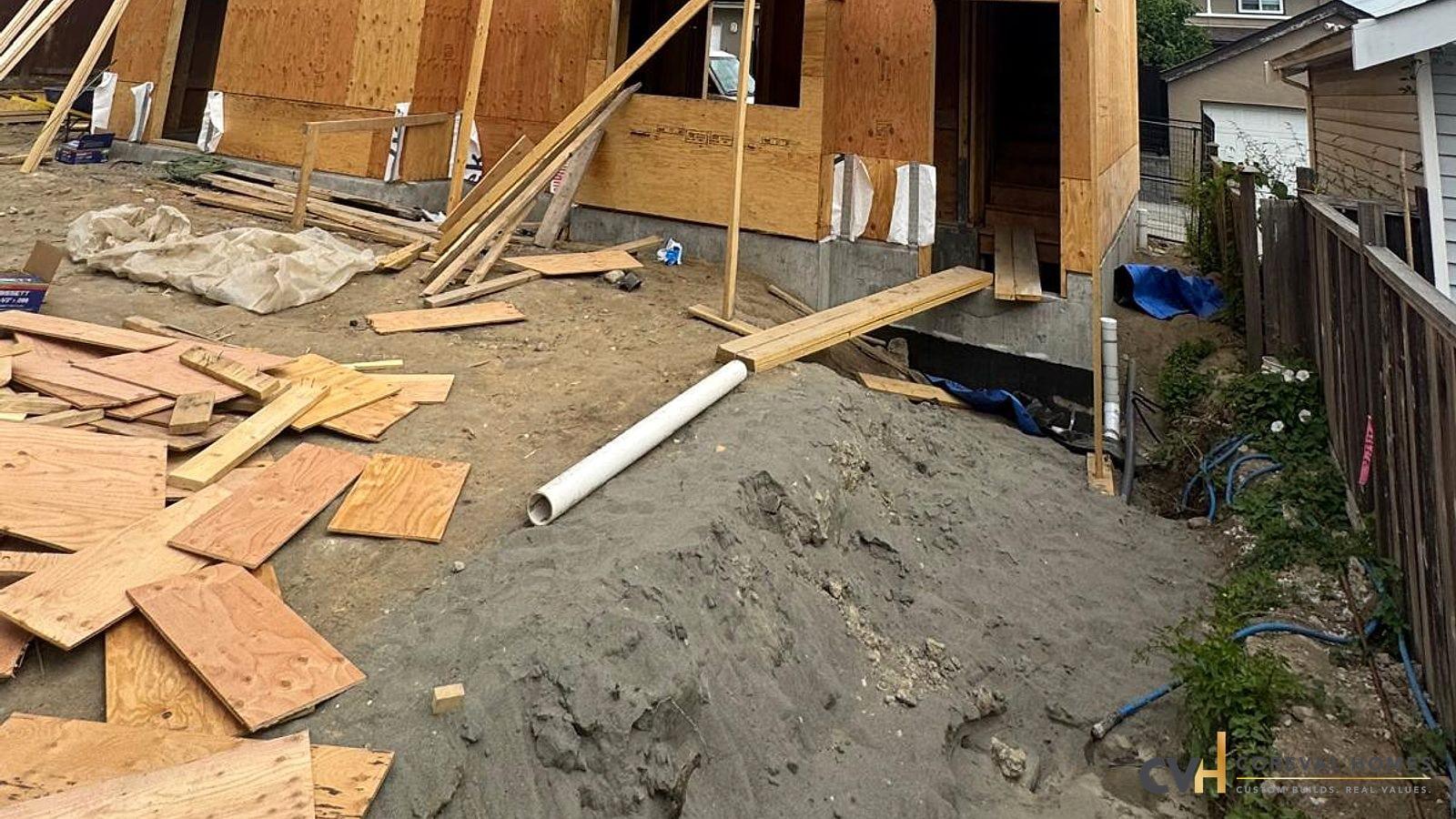
TL;DR
The custom home building process in Abbotsford explained step by step: licensing, permits, design, construction phases, and realistic timelines.
The custom home building process in Abbotsford runs in a set order: a first call and site visit, rough numbers, design, permits, then construction. Before construction, expect about two weeks for the call and site visit, another week or two for rough numbers, 4 to 6 weeks of design, and anywhere from 3 to 10+ weeks for permits. Construction is usually 8 to 12 months.
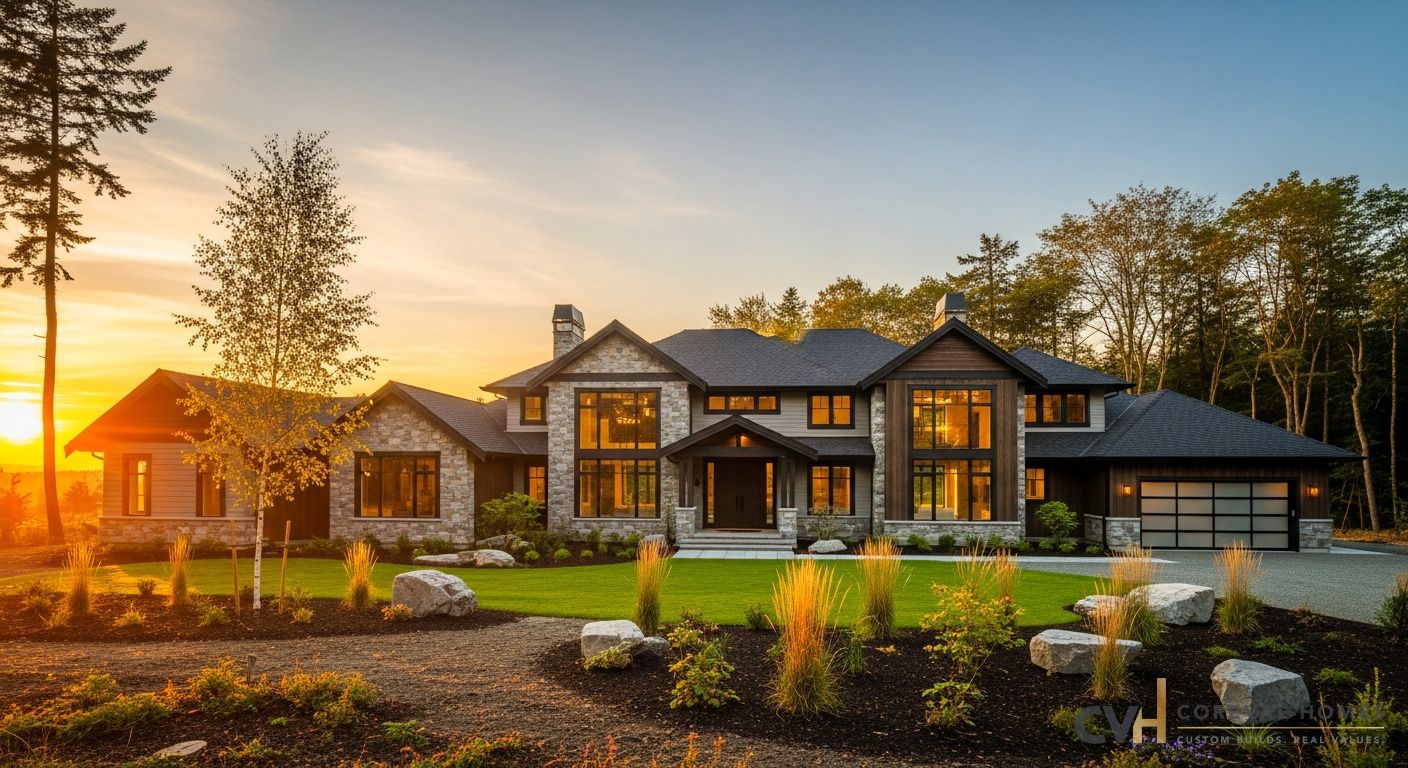

What Happens Before Construction Starts?
Most of the early work is conversation and paperwork, and it sets the quality of everything after it.
The First Call and Site Visit
The call goes straight to Gordie, the owner. Within minutes CoreVal is looking at your property and what is possible on it. A site visit follows, where the team learns your vision, budget and needs. This stage takes about two weeks.
Rough Numbers
CoreVal then works up rough numbers, holds internal discussions and goes back and forth with you. Allow another week or two. This is where expectations get set honestly, before any design money is spent.
Design and Revisions
Design, revisions and sometimes outside specialists take about 4 to 6 weeks. In Abbotsford, soil matters. Geotechnical and structural engineers should be involved early, because the ground often decides the foundation more than the architect does.
Permits
David Bond, CoreVal's President, puts it plainly: "Permits... that's the part everyone underestimates. It can be 3 weeks, it can be 10+, and you don't fully control it."
Abbotsford permits are reviewed against the City's Zoning Bylaw No. 2400-2014 and the BC Building Code. If your lot sits inside the Agricultural Land Reserve, check the rules with the Agricultural Land Commission before you design anything. While the permit is in review, CoreVal plans the build and finalizes details so no time is wasted.
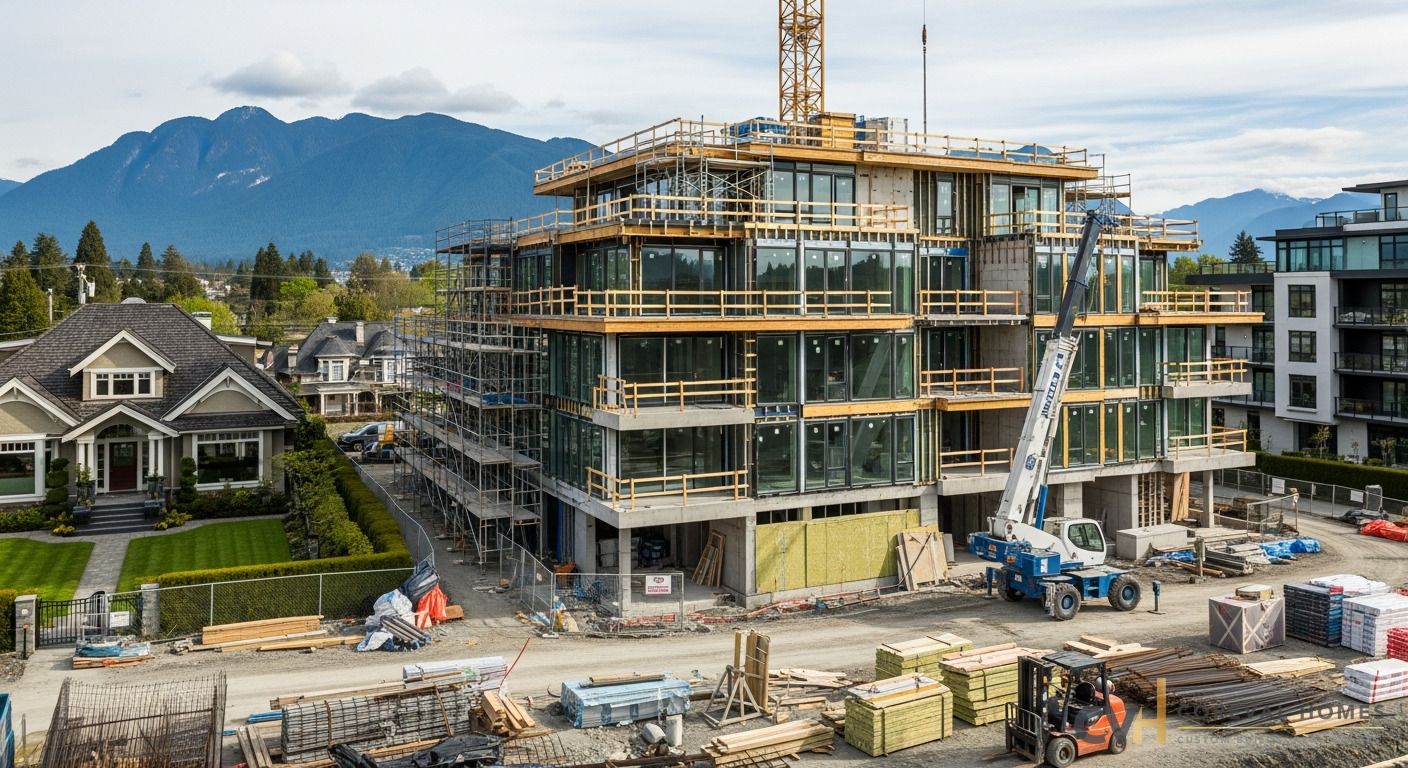
How Long Does Construction Take, and Why Does the End Feel Slow?
Construction is usually 8 to 12 months. Framing, the building envelope, mechanical rough-in and finishing all happen in that window, and each one depends on the last being done right.
The final stretch is what catches people off guard. David Bond says: "Everyone thinks it's basically done, but there's still a lot of coordination, drying time, inspections. It can feel like the site went quiet for a few days and people get nervous."
CoreVal's answer is constant communication. In David's words: "we've got chat groups, quick responses, no guessing." A quiet site is usually a drying or inspection window, and you hear about it before you have to ask.
After the final inspections you receive occupancy and your home warranty is registered. BC's Homeowner Protection Act requires licensed builders to provide the 2-5-10 warranty: two years on labour and materials, five on the building envelope and ten on structural defects, as outlined by BC Housing.
What Mistakes Derail a Custom Home Build?
The most common one is choosing on price alone. David Bond says those clients "are usually the people who call us later asking us to step in and fix or finish a project." His comparison: "it's like going to a restaurant. You don't just pick the cheapest Caesar salad; you pick the place that gives you the best experience within your budget."
A second mistake is bringing your own trades or materials to save money. "It's like bringing your own chef into a restaurant kitchen; he doesn't know where anything is, it disrupts everything, and you end up paying more," says David.
A third is expecting a lower price to buy the same result. David's analogy: "I can sell you a car and remove the airbags because you don't see them; construction works the same way." A good builder also includes contingency in the estimate. In David's words, this is "not because they're inexperienced, but because every project has unknowns, and it's better to be upfront about that than surprise a client halfway through."
CoreVal's fix is to slow things down early, define what really matters and make expectations clear before anything starts.
How Do You Choose a Builder Before You Sign?
David Bond says the biggest challenge in this industry is "a lack of education and understanding." His comparison: "It's like shopping for a car; a Kia, a Honda, and a Mercedes will all get you from point A to point B, but the price and what you're actually getting are completely different."
CoreVal's pre-construction approach is to educate and advise before selling anything. The team visits the lot, learns what you truly need and will say so when you are about to pay for something unnecessary. The same internal team and trades work on every build.
Use this checklist with any builder you interview, CoreVal included:
- Ask for the licence number and verify it through BC Housing's licensing services before any money changes hands.
- Ask who you will speak to day to day, and whether that person is named in the contract.
- Ask whether the builder will visit your lot before quoting.
- Ask to see the fixed scope and the written change-order process.
- Ask which trades will work on your home, and whether they are the same crews used on other builds.
- Ask what contingency is included and what it covers.
- Ask how site updates are shared, such as a group chat or weekly calls, and how fast questions get answered.
A builder who answers these clearly before you sign will likely communicate just as clearly when the site goes quiet in the last weeks.
Related: a luxury custom home builder in Abbotsford · a house building company in Burnaby · building construction cost per square foot
Enjoying our articles? Stay informed on real estate & development.
Make us your preferred source on Google