TL;DR
Laneway homes are redefining urban living in Vancouver, offering homeowners a way to maximize property value and address the city’s housing crunch. Yet, the journey from concept to completion is anything but straightforward. At CoreVal Homes, we’ve built our reputation as the go-to Vancouver la...
The best way to tackle laneway construction challenges is to plan hard before anything is built. A Vancouver laneway homes builder worth hiring reviews the full project before the permit goes in, sets expectations on day one, keeps one accountable team on the job, and checks in with you regularly. Most problems start before the first shovel.

What Makes a Laneway Home Project Succeed?
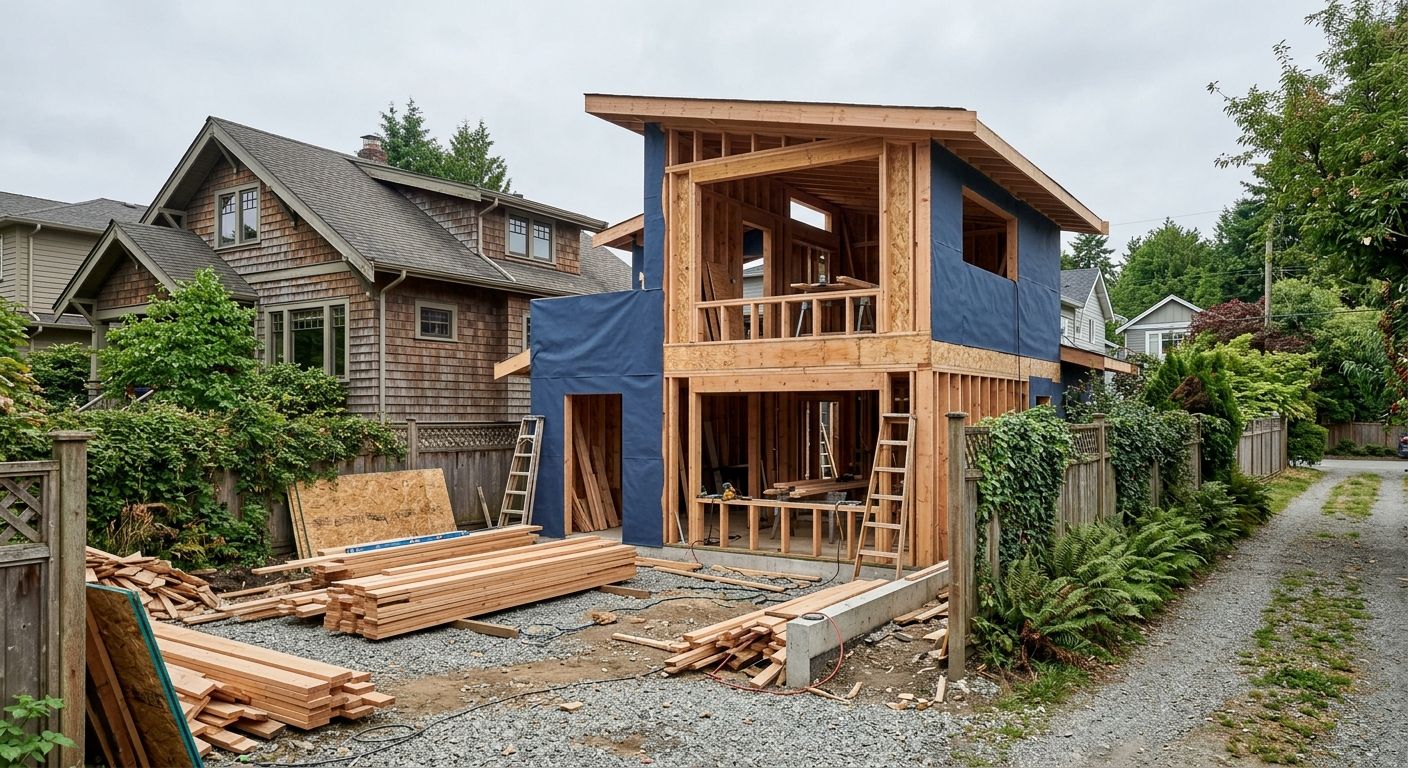
Planning does, according to David Bond, CoreVal's President. He describes the latest project CoreVal is completing, a 1,500 sq ft laneway home:
"The latest project we're completing is a 1,500 sq ft laneway home, and what made it a success is simple; planning. Setting the right expectations from day one is what removes surprises later. We take the time to fully review the project before submitting for permit, and we maintain regular check-ins with the client throughout; that consistency is key. If we could control the weather and permit timelines, it would be paradise; but aside from that, it's all about preparation."
Two habits stand out. The project is reviewed in full before the permit application, and the client hears from the builder on a regular schedule instead of only when something changes.
What Does the Lot Decide Before Design Starts?
The lot sets the limits, so check it first. The City of Vancouver sets lot eligibility rules for laneway houses, and zoning overlays or covenants can restrict a lot further. Beyond that, these items shape the design and the schedule:
- Slope, which can call for custom foundation engineering, stepped slabs and drainage planning with a geotechnical engineer.
- Utility connections, which often run through mature landscaping or under existing driveways and need coordination with BC Hydro, FortisBC and City inspectors.
- Energy requirements, since new builds are designed around rules such as the BC Energy Step Code.
Settle these before design is locked in, and fewer surprises reach the site.
What Do BC Homeowners Get Wrong That CoreVal Has Learned the Hard Way?
David Bond points to two mistakes. The first is rushing pre-construction:
"The more you rush pre-construction, the more you screw up your project. Everyone wants to get started fast, but that's where most of the damage happens. Bad decisions early turn into delays, changes, and cost overruns later."
The second is bringing in your own trades or materials to save money:
"On paper, it sounds smart. In reality, it turns into chaos. Too many cooks in the kitchen, no clear accountability, and things start slipping. Every time we see it, it makes the project more complex; not less."
In practice, the two mistakes look like this:
- Starting construction before the design, scope and permit package have been fully reviewed.
- Splitting responsibility between your trades and the builder's team, so nobody owns a mistake.
- Choosing materials separately from the builder, which can disrupt sequencing and make accountability unclear.
If you feel pressure to start quickly, treat it as a sign to slow the planning down, not speed the building up.
How Is CoreVal Different, and How Should You Vet a Builder?
David Bond is direct that CoreVal is not the only good option: "There are a lot of good builders out there, no question. For us, it comes down to how we operate. We stick to our values, we're transparent, and when something goes wrong, we own it and fix it."
He gives an example of those values at work. CoreVal turned down a large amount of extra scope on a project because the team did not believe it added value, even though it meant more profit. "That's just how we think," he says.
He also describes how client relationships develop: "Our clients become like family. It's not forced; it just happens." In one case a client forgot their child's car seat at home and called CoreVal's site supervisor, who jumped in the truck and brought it to them. "No questions asked. The whole team backed him on it." As he puts it: "It's not just building homes; it's how we show up for people."
What Should You Ask Before You Hire?
Use these questions as a decision rule. If a builder cannot answer them clearly, keep looking.
- Will you review the whole project before the permit is submitted, and what does that review cover?
- How often will we check in, and who will I speak to?
- Who is accountable if a trade or material I supplied causes a problem?
- Have you ever advised a client against extra scope that would have added to your profit?
- When something goes wrong, how do you handle it, and can you give an example?
The third question matters most. A builder who takes full responsibility for trades and materials gives you one point of accountability. Mixing in your own suppliers can erase that.
What Should You Do First?
Start with the lot, not the finishes. Confirm your lot meets the City's laneway eligibility rules, then ask a builder to review zoning, slope, servicing and energy requirements before design begins. Agree on how communication will work and who is accountable for every trade. Only then submit for permit.
You cannot control the weather or the city's permit timelines, but you can control how prepared the project is when it starts. If you are weighing a laneway home on your property, contact CoreVal to talk through your site and your plan.
Enjoying our articles? Stay informed on real estate & development.
Make us your preferred source on Google